
Written by Lance Ackerman, Colorado Springs Utilities
What does an economic crisis, and a water crisis have in common? Opportunities for big changes in the way we do things. Converting turfgrass to native grass is one of those big changes that have come from recent challenges in the cost of water to keep turf grass alive and the search to find enough water for thirsty turfgrass in our urban environments.
Native grass landscapes are challenging, fun and if you are patient, reap big results.
Converting large areas of low-use turf grass to native grass began in Colorado Springs in 2013 when City Parks were so strapped for cash to pay for irrigation water that their deficit watering left many park areas looking terrible. Colorado Springs Utilities partnered with City Parks and offered a turf-to-native rebate. City Parks quickly became our largest customer. Over the course of 10 years, they converted about 20 acres with our native grass rebate and another 20 acres on their own. They targeted peripheral areas where turf was not used often and with the water they saved, they could afford to keep the athletic fields in much better shape.
Fast forward to the 2020s where Colorado River supplies are in jeopardy. This challenge brought a lot of attention to urban outdoor water use and the thirsty choice of turfgrass. The Colorado legislature looked for quick solutions through the following legislative actions. These actions will change the way your customers, both residential and commercial, design and plan their landscapes:
- Turf Removal bill HB 22-1151 appropriated $2 million to the Colorado Water Conservation Board to provide funding to cities like Colorado Springs to develop turf removal programs. This bill received additional funds in 2024.
- Colorado SB24-005 Non-Functional Turfgrass legislation prohibits commercial, government and HOAs from installing new, non-functional turfgrass at commercial, institutional, industrial buildings and transportation corridors (parkways and medians). At the writing of this article, the Colorado legislature will soon vote to extend this law to multi-family and residential properties.
And most Front Range cities now have commercial landscape codes that limit turfgrass for residential and commercial new construction. Colorado Springs limits turfgrass to 25% of the landscaped area for residential and commercial properties.
Native Grass Rebates and Incentives
The Colorado Springs Utilities Water Conservation Team focuses on opportunities for resilient and beautiful landscapes amid all this change which is why we have turned to native grass as a powerful alternative to turfgrass (in the right instances).
Today, Colorado Springs Utilities offers a rebate of $.50 per square foot for native grass installation projects at commercial properties (even if they are not removing turf grass). Why? We have learned through many projects that these solutions are extremely cost effective, offer resilient landscape options for our climate and save 50% or more of the water typically needed for turfgrass.
For residential customers we offer a suite of training on irrigation efficiency and native grass
options, installation and maintenance, and then provide our customers with free native grass seed and free high efficiency irrigation nozzles for their native grass lawn project. We know our
customers will have to be committed to these projects for success and we want to give them all the tools they need to do it!

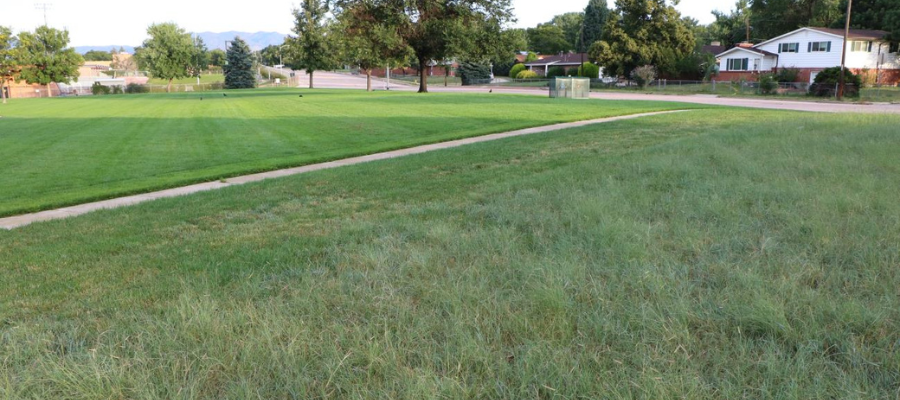
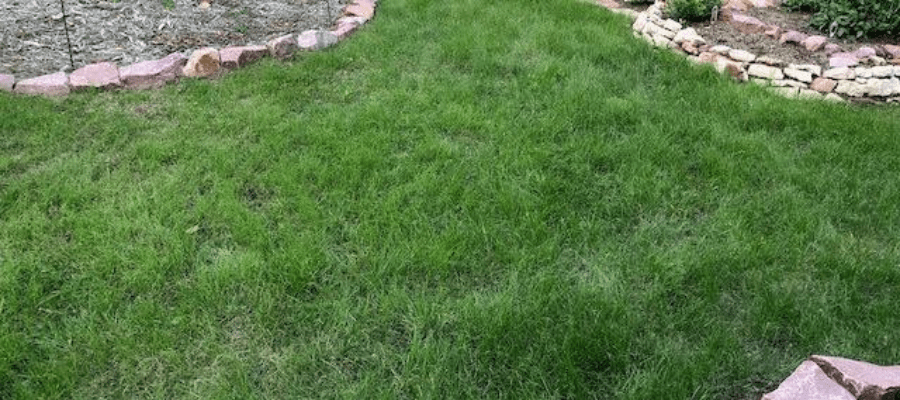
Here’s just one case study. The final proof is in the beauty of these converted landscape and the savings!!
A Case Study
A community church in Colorado Springs was determined to lower their water and maintenance costs for over one acre of high-water turf grass that surrounded their building. This customer upgraded their irrigation system and used our turf to native rebate which provided them with $20,000 to cover the $20,000 conversion ($.50/sf).
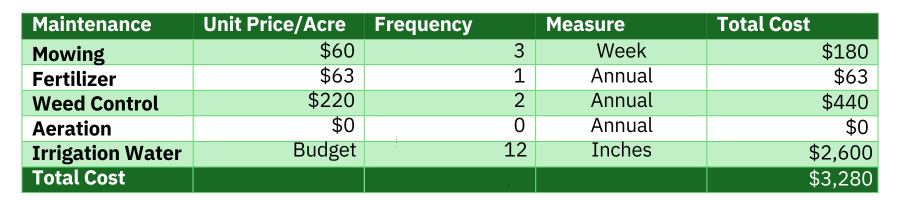
They chose a blue grama and buffalograss native grass mix and in the second year of this project reduced their watering and maintenance by 56% (see table below). This alternative water wise landscape shifted water use from 24 inches per watering season to 12 inches and that’s just the beginning of the story. Maintenance costs also decreased tremendously after establishment.
What’s the Catch?
We’ve been partnering with customers on native grass projects since 2013 and there is so much more to learn. The good news is that there are great resources for Colorado. Check out the Colorado Native Grass Guide where you’ll find a tremendous group of case studies, educational resources and where you can join the ongoing discussion through Native Grass Working Group meetings and workshops.
Some of the biggest project challenges you’ll face:
- These projects must be installed between June 1 and July 31 for best success.
- Your project can look great in the first year but plan on 2-3 years before you have a finished, valuable project.
- The seeding method and rate is not straightforward. There have been many methods used and there still is more work to be done to figure out when, what, where and how.
- You’ll need to get really good at managing weeds. Plan on focusing on this work for 2-3 years.
More Good News
Native grass is catching on and becoming the expert in your community on native grass projects could be a huge benefit for your business. We hope you are inspired to learn more!

From the author
Lance Ackerman
Senior Water Conservation Specialist
Colorado Springs Utilities
I am a true Colorado Native! I grew up in Colorado Springs and only ventured a short distance away to go to school in Fort Collins, Colorado. After receiving a Bachelor of Science in Environmental Horticulture and Landscape Design from Colorado State University, I anticipated that as an entrepreneur, I would work in the field and create amazing landscapes. What I discovered about myself is that I have a solid vision for the landscapes of our future and needed a broader outlet for that vision. I found a great place to share this vision at Colorado Springs Utilities in Water Conservation. Here I am among strong SMEs in the field and together we are acting as a catalyst for change for our community. What I bring to this effort is both a vision for our future and a methodology for testing many projects and programs with customer and landscape partners.
 Colorado Green News