

Written by Hal Benninger at Center for Community Wealth
Whether you own a landscaping business or work for one, you understand the value your work brings to the community. You’ve built the company from the ground up—navigating challenges, developing expertise, and serving your neighbors with dedication and pride. But as you look ahead, questions naturally arise: What happens when it’s time to retire? How do you find the right buyer or successor who will honor what you’ve built, leaving employees and customers in good hands? Will you get a fair price for the business you’ve worked so hard to grow? These concerns aren’t just personal—they’re strategic. Exit planning protects the sustainability of the business, preserves jobs, and ensures the business will continue to have a positive impact on employees, clients, customers, and the local economy.
That’s where employee ownership comes in.
What Is Employee Ownership?
Employee ownership allows for a business to be sold at fair market value while keeping ownership in the hands of the people who have contributed to its success all along. Employee owned businesses continue to serve their community, keep profits circulating locally, and guarantee decisions are made by those closest to the day-to-day operations.
For current owners, rather than selling to an outside buyer who might change the culture of the business, why not sell part or all of your business to employees? Selling to your staff not only allows you to sell at fair market value and keep your business rooted in the community, it also allows you to take your time with the selling process. You can start small, selling only part of your business to employees as they slowly learn to take ownership, and transfer the business over time. Or if you prefer, you can sell it all at once, as with an external buyer. The flexibility that selling to employees allows you is unparalleled.
For landscaping workers, employee ownership is especially successful. Landscaping businesses often rely on skilled, dedicated teams and long-standing client relationships. Workers who have invested years into the business gain a meaningful stake in its success through employee ownership and the result is a more motivated workforce, improved morale, and a business that is more likely to thrive over the long term. Employee ownership also builds wealth for employees who might not otherwise have the opportunity to own a business.
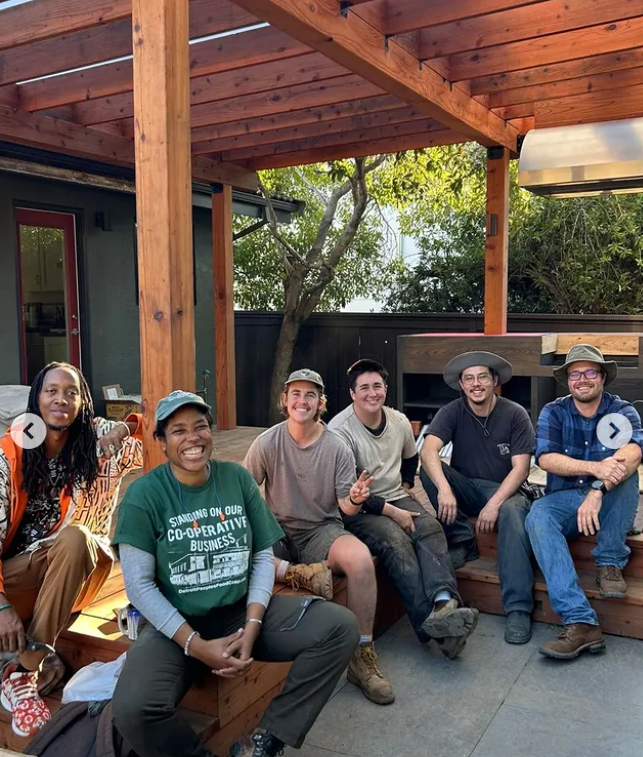
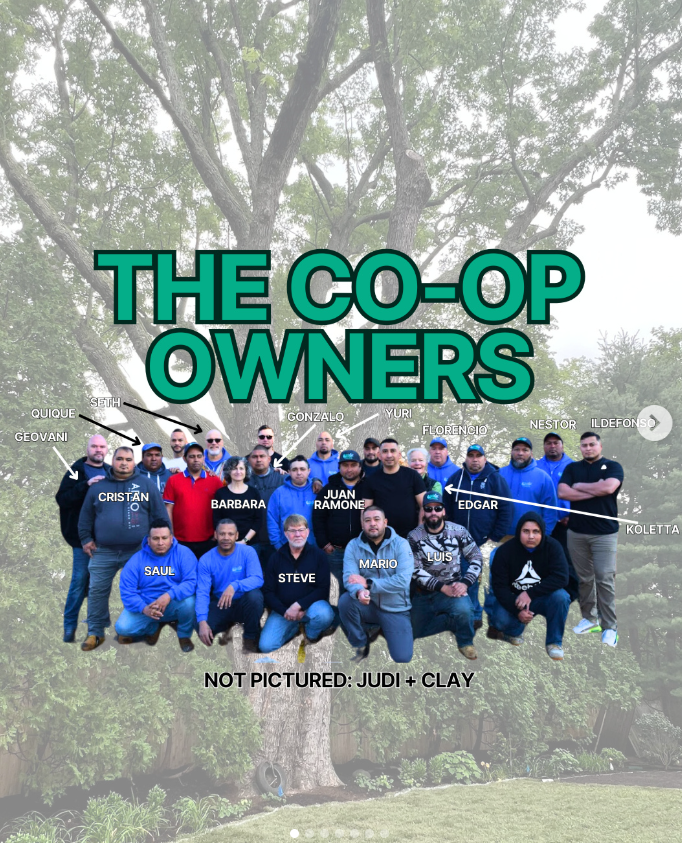
Successful examples of landscaping businesses that have embraced employee ownership demonstrate the model’s strength in the sector. A Yard and A Half Landscaping Cooperative, based in Massachusetts, started in 1988 and converted to worker-ownership in 2007 to align more with their values; the company continues to thrive today with 19 worker-owners. Root Volume in the Bay Area demonstrates the success of starting a landscaping business as a co-op with their 5 worker-owners successfully serving its community. These businesses have reported increased employee engagement and retention, resulting in a culture that prioritizes collective success and leads to higher customer satisfaction.
A Growing Opportunity in Colorado
Employee ownership is gaining traction in both urban and rural areas of Colorado, especially as a succession strategy, as business succession numbers can be stark. Less than 20% of businesses listed for sale ever sell, and only 15% are passed to family members. Without a plan, many businesses close when their owners retire, resulting in job losses, disappointed clients, and a weakened local economy.
A new grant from the Colorado Office of Economic Development and International Trade (OEDIT), in partnership with Center for Community Wealth Building (CCWB) and the Rocky Mountain Employee Ownership Center (RMEOC), is making it easier and more affordable for Colorado business owners to convert to employee ownership. The program provides a 50-100% scholarship, on a sliding scale basis, as support towards the cost of technical assistance during the conversion process. This is in addition to a state tax credit that reimburses 50% of eligible out-of-pocket expenses. To qualify, businesses must agree to sell at least 20% of the company to three or more employees. The application process is simple and available online.
And right now, the timing couldn’t be better. Thanks to this limited-time funding opportunity, converting Colorado businesses to employee ownership is more accessible and affordable than ever before. There’s never been a better moment to take the first step toward exploring employee ownership and planting the seeds for long-term business success.Are you ready to take the next step? Let’s talk about how to get started. Contact Hal at Center for Community Wealth at hal@communitywealth.org or 720-541-9855. We look forward to hearing from you!
Planting the seeds for long-term success through Employee Ownership
Whether you own a landscaping business or work for one, you understand the value your work brings to the community. You’ve built the company from the ground up—navigating challenges, developing expertise, and serving your neighbors with dedication and pride. But as you look ahead, questions naturally arise: What happens when it’s time to retire? How do you find the right buyer or successor who will honor what you’ve built, leaving employees and customers in good hands? Will you get a fair price for the business you’ve worked so hard to grow? These concerns aren’t just personal—they’re strategic. Exit planning protects the sustainability of the business, preserves jobs, and ensures the business will continue to have a positive impact on employees, clients, customers, and the local economy.
That’s where employee ownership comes in.
What Is Employee Ownership?
Employee ownership allows for a business to be sold at fair market value while keeping ownership in the hands of the people who have contributed to its success all along. Employee owned businesses continue to serve their community, keep profits circulating locally, and guarantee decisions are made by those closest to the day-to-day operations.
For current owners, rather than selling to an outside buyer who might change the culture of the business, why not sell part or all of your business to employees? Selling to your staff not only allows you to sell at fair market value and keep your business rooted in the community, it also allows you to take your time with the selling process. You can start small, selling only part of your business to employees as they slowly learn to take ownership, and transfer the business over time. Or if you prefer, you can sell it all at once, as with an external buyer. The flexibility that selling to employees allows you is unparalleled.
For landscaping workers, employee ownership is especially successful. Landscaping businesses often rely on skilled, dedicated teams and long-standing client relationships. Workers who have invested years into the business gain a meaningful stake in its success through employee ownership and the result is a more motivated workforce, improved morale, and a business that is more likely to thrive over the long term. Employee ownership also builds wealth for employees who might not otherwise have the opportunity to own a business.
Successful examples of landscaping businesses that have embraced employee ownership demonstrate the model’s strength in the sector. A Yard and A Half Landscaping Cooperative, based in Massachusetts, started in 1988 and converted to worker-ownership in 2007 to align more with their values; the company continues to thrive today with 19 worker-owners. Root Volume in the Bay Area demonstrates the success of starting a landscaping business as a co-op with their 5 worker-owners successfully serving its community. These businesses have reported increased employee engagement and retention, resulting in a culture that prioritizes collective success and leads to higher customer satisfaction.
A Growing Opportunity in Colorado
Employee ownership is gaining traction in both urban and rural areas of Colorado, especially as a succession strategy, as business succession numbers can be stark. Less than 20% of businesses listed for sale ever sell, and only 15% are passed to family members. Without a plan, many businesses close when their owners retire, resulting in job losses, disappointed clients, and a weakened local economy.
A new grant from the Colorado Office of Economic Development and International Trade (OEDIT), in partnership with Center for Community Wealth (CCW), is making it easier and more affordable for Colorado business owners to convert to employee ownership. The program provides a 50-100% scholarship, on a sliding scale basis, as support towards the cost of technical assistance during the conversion process. This is in addition to a state tax credit that reimburses 50% of eligible out-of-pocket expenses. To qualify, businesses must agree to sell at least 20% of the company to three or more employees. The application process is simple and available online.
And right now, the timing couldn’t be better. Thanks to this limited-time funding opportunity, converting Colorado businesses to employee ownership is more accessible and affordable than ever before. There’s never been a better moment to take the first step toward exploring employee ownership and planting the seeds for long-term business success.Are you ready to take the next step? Let’s talk about how to get started. Contact Hal at Center for Community Wealth at hal@communitywealth.org or 720-541-9855. We look forward to hearing from you!
Root Down Landscaping Cooperative worker-owners
A Yard and A Half Landscaping Cooperative worker-owners
 Colorado Green News